
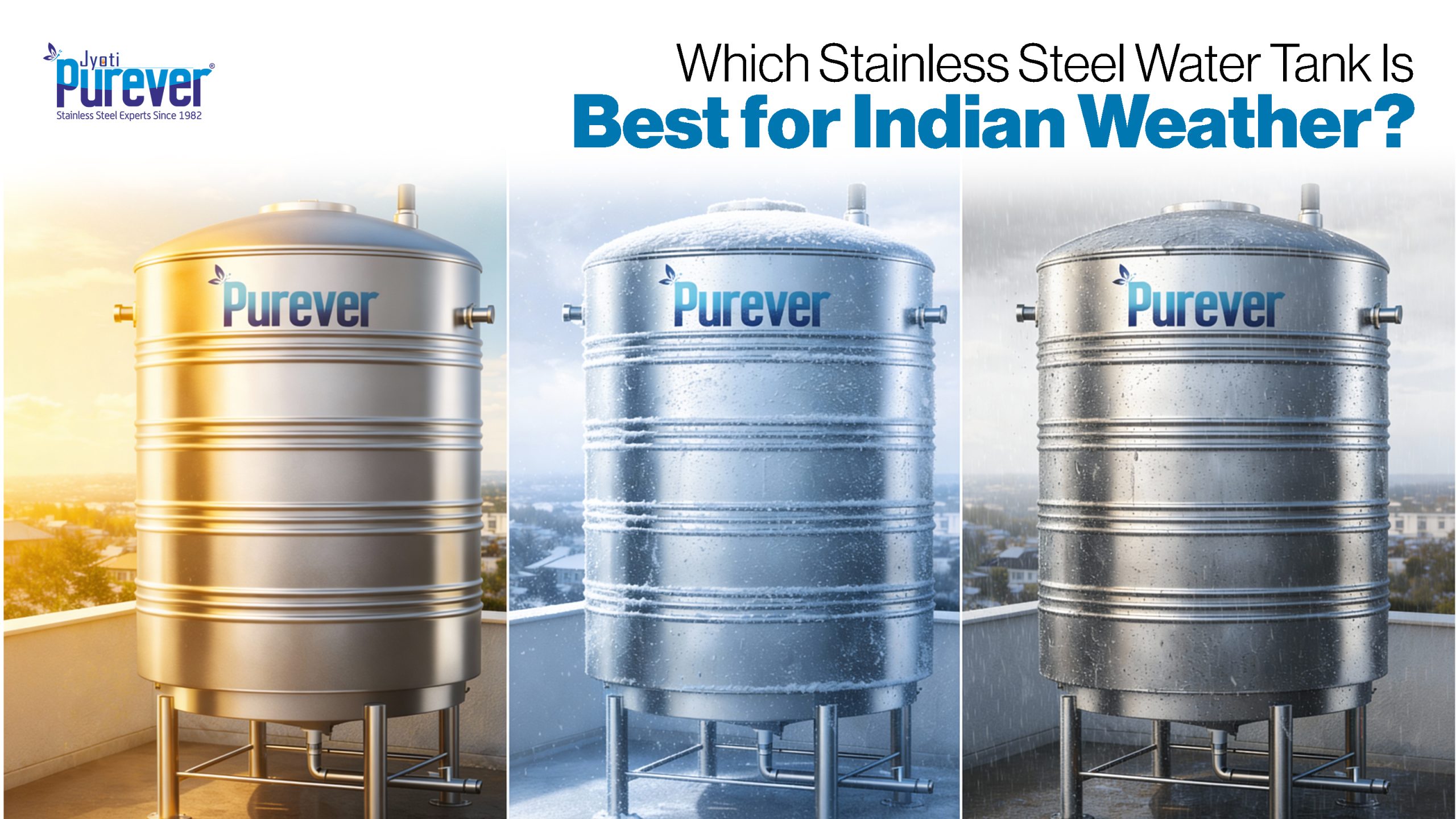
Indian weather doesn’t play fair. One month it’s scorching heat, then come the monsoons, followed by dust, humidity, and temperature swings that test almost everything on your rooftop. Water tanks feel this stress more than most people realise. That’s why choosing the right stainless steel water tank isn’t about brand names alone, it’s about understanding how the material behaves through Indian seasons.
Let’s break this down in a practical way.
First, Understand What Indian Weather Really Does to Tanks
In peak summers, rooftop temperatures can cross 60°C. Plastic tanks soften. Concrete tanks expand and contract. Over time, both start showing cracks, leaks, or contamination issues.
During monsoons, moisture sits on surfaces for days. Poor-quality metals corrode. Joints weaken. And in areas with hard water, mineral deposits slowly eat away at inferior materials.
This is exactly why stainless steel water tanks have become the preferred option in Indian homes and commercial buildings. But not all stainless steel tanks are built the same.
The Grade of Steel Matters (A Lot)
For Indian conditions, a good stainless steel water tank should ideally be made from food-grade stainless steel that can handle heat, moisture, and mineral-heavy water without reacting.
Lower-grade steel may look fine initially, but over time it can develop surface corrosion or lose its finish. A reliable SS water tanks manufacturer will always specify the steel grade clearly and design the tank keeping Indian climate in mind.
If you’re unsure, ask one simple question:
“Will this tank still behave the same after 10 Indian summers and 10 monsoons?”
That usually filters out weak options fast.
Design Is Just as Important as Material
Indian rooftops are rarely simple. Some are flat, some sloped, many crowded with solar panels, wiring, and dish antennas. A standard tank often ends up exposed unnecessarily.
This is where choosing a tank from an experienced SS water tanks manufacturer makes a difference. Taller vertical designs help reduce heat absorption. Proper lids prevent dust and insects. Thoughtful outlet placement avoids stagnation.
A well-designed stainless steel water tank doesn’t fight the climate, it works around it.
Insulation: Not a Luxury in India
In many parts of the country, stored water becomes uncomfortably hot by afternoon. Insulated stainless steel water tanks help maintain more stable water temperature, especially for homes, hotels, and hospitals.
Insulation also reduces thermal stress on the tank itself, which quietly increases lifespan. A good SS water tanks manufacturer will offer insulation options suited for Indian summers, not generic add-ons.
Maintenance Should Be Simple
Indian environments bring dust, pollution, and varying water quality. A stainless steel water tank with smooth interiors and clean welds stays easier to clean and doesn’t trap residue.
That’s one of the biggest advantages of choosing quality stainless steel water tanks, they don’t demand constant attention. Most people clean them once or twice a year, even in harsh conditions.
Where Purever Fits In
Purever designs stainless steel water tanks specifically for Indian conditions – heat, humidity, dust, and long-term usage. As an experienced SS water tanks manufacturer, their focus is on steel quality, structural strength, and designs that survive real rooftops, not showroom conditions.
Their tanks aren’t built for one season. They’re built for decades of Indian weather.
So, Which One Is Best?
The best stainless steel water tank for Indian weather is one that:
uses the right steel grade
is designed for heat and moisture
comes from a reliable SS water tanks manufacturer
and doesn’t need constant fixing
In India, durability isn’t optional, it’s the whole point.
If you choose right once, your tank won’t care whether it’s summer, monsoon, or winter. And that’s exactly how it should be.