
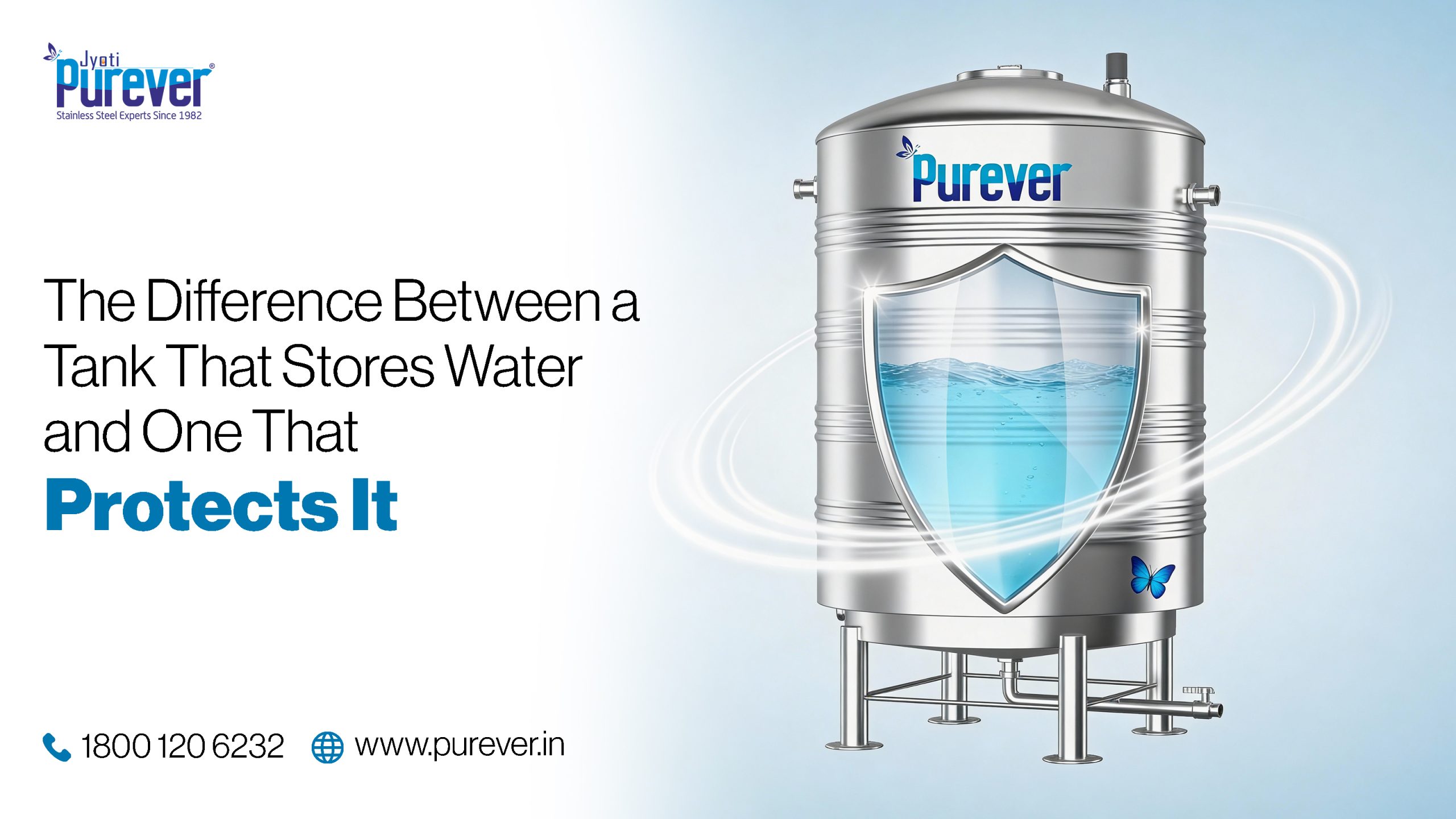
Most water tanks do one basic job: they hold water. Fill them up, close the lid, forget about them. For years, that was considered enough. But once you start paying attention, really paying attention, you realise there’s a quiet difference between a tank that simply stores water and one that actively protects it.
That difference shows up slowly. In taste. In smell. In how often the tank needs cleaning. And eventually, in how much trust you place in the water you’re using every day.
Storage Is Passive. Protection Is Intentional.
A tank that stores water doesn’t care what happens inside it. Light sneaks in. Temperature fluctuates. Algae finds its way onto the walls. Over time, water changes – subtly, but noticeably.
A Commercial SS Water Tank, on the other hand, is built with protection in mind. Stainless steel blocks light completely. The interior surface doesn’t absorb moisture. Bacteria don’t get comfortable there. The water stays closer to what it was when it entered the tank.
That difference matters more in large buildings, where water sits longer and usage is constant.
Where Most Tanks Fall Short
Plastic tanks are common, but they let light through. Concrete tanks are sturdy, but porous. Both need frequent attention to keep water quality in check.
In high-usage environments – hotels, hospitals, office complexes – these weaknesses show up fast. Cleaning schedules become aggressive. Complaints increase. Maintenance teams stay busy.
This is why many facilities move toward Commercial Stainless steel Water Tanks. Not for aesthetics. For control.
A Commercial SS Water Tank doesn’t just store water, it limits what can go wrong inside it.
Protection Shows Up in Daily Operations
Here’s something people don’t talk about enough: water protection isn’t dramatic. It’s quiet.
When a tank protects water well, there are fewer odour complaints. Less visible residue. Less need for chemical cleaning. Fewer “just in case” drain-and-wash routines.
Facilities using Commercial Stainless steel Water Tanks often realise this only after switching. The water feels consistent. The system feels calmer. And the tank stops being a topic of discussion, which is usually a good sign.
Design Plays a Bigger Role Than You Think
Protection isn’t just about material. It’s about how the tank is designed.
Poor outlet placement causes stagnation. Awkward shapes trap residue. Inaccessible lids discourage proper cleaning. These are design failures, not material failures.
A well-designed Commercial SS Water Tank avoids these issues. Complete drainage. Easy access. Smooth interiors. Logical flow. These details protect water quietly, every day.
That’s why Commercial Stainless steel Water Tanks work best when design and material are treated as one system.
Where Purever Fits Into This Difference
Purever’s approach to Purever SS Water Tanks focuses on this idea of protection rather than basic storage. Their tanks are designed for real-world usage – high demand, long storage cycles, strict hygiene expectations.
In many installations, Purever SS Water Tanks don’t draw attention because there’s nothing to fix, nothing to adjust, nothing to compensate for. They just keep water stable.
That’s the difference between equipment and infrastructure.
So What’s the Real Difference?
A tank that stores water is a container.
A tank that protects water is a system.
In commercial environments, that distinction affects hygiene, maintenance, and long-term reliability. That’s why Commercial Stainless steel Water Tanks, especially a well-built Commercial SS Water Tank, have become the default choice where water quality isn’t negotiable.
And it’s why systems like Purever SS Water Tanks are increasingly seen not as upgrades, but as safeguards.