
If you ask a facility manager what keeps them up at night, it’s rarely the obvious things. It’s the silent risks, the ones that don’t show up until they become a problem.
Water contamination sits high on that list.
Not because it happens often, but because when it does, the impact is immediate. Complaints. Shutdowns. Inspections. In places like hospitals, hotels, or food units, even a small issue can spiral quickly. That’s why many large facilities have quietly shifted toward commercial stainless steel water tanks over the years.
The Problem Isn’t Storage, It’s What Happens Inside
Most tanks can store water. That part isn’t difficult. The real challenge is keeping that water clean over time.
In large facilities, water doesn’t just sit for a few hours. It moves in cycles – stored, used, refilled, sometimes held longer during low-demand periods. During this process, a few things can go wrong:
Light entering the tank encourages algae growth
Rough surfaces trap residue and biofilm
Stagnant pockets form due to poor drainage
These are small issues individually. But in high-usage environments, they build up quickly.
This is exactly where commercial ss water tanks start making a noticeable difference.
Why Stainless Steel Changes the Equation
A well-built ss water tank behaves very differently from conventional options. The material itself solves several problems at once.
First, stainless steel blocks light completely. No light means algae doesn’t get the environment it needs to grow.
Second, the interior surface is smooth and non-porous. There are no tiny cavities for dirt or bacteria to settle into. Cleaning becomes simpler and more effective.
Third, stainless steel doesn’t react with water or chemicals commonly used in treatment processes. That stability helps maintain consistent water quality.
This is why industries that care deeply about hygiene – food processing, healthcare, pharmaceuticals, often rely on commercial stainless steel water tanks as a standard.
When Hygiene Becomes a Daily Responsibility
In smaller buildings, cleaning a tank is an occasional task. In large facilities, it’s part of routine operations.
If cleaning is difficult, it gets delayed. If it gets delayed, contamination risk increases.
A properly designed commercial ss water tanks setup reduces this friction. Access points are easier to reach. Surfaces are easier to clean. Drainage is more complete.
This doesn’t just save time, it reduces the chances of hygiene slipping through the cracks.
Design Matters as Much as Material
Not all tanks perform equally, even if they’re made of steel.
A poorly designed ss water tank can still create stagnant zones or make cleaning inconvenient. That’s why layout, outlet positioning, and internal finish matter just as much as the material itself.
High-quality commercial stainless steel water tanks are designed with these factors in mind, ensuring proper flow, complete drainage, and practical access.
Over time, this thoughtful design plays a major role in maintaining water hygiene.
Where Purever Fits In
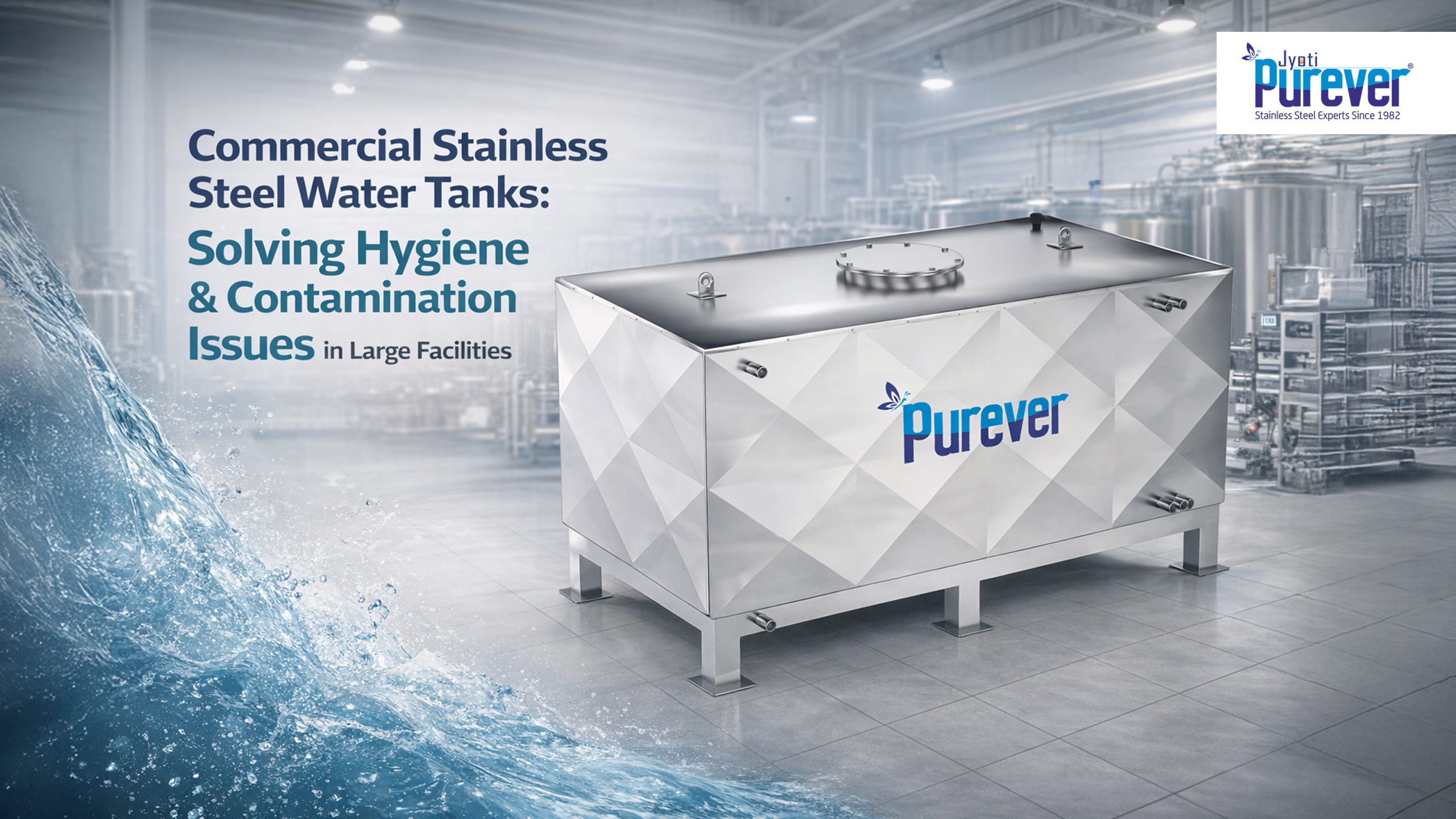
Purever focuses on building systems that reduce contamination risks rather than just storing water. Their commercial stainless steel water tanks are designed for hygiene, durability, and ease of maintenance.
By combining material quality with practical design, Purever’s commercial ss water tanks help facilities maintain consistent water standards without constant intervention.
For many large buildings, a well-built ss water tank from Purever becomes a quiet safeguard – working in the background, preventing problems before they start.
Clean Water Shouldn’t Be a Daily Concern
In large facilities, water quality shouldn’t depend on constant monitoring or frequent corrective action.
Reliable commercial stainless steel water tanks help make that possible. They reduce contamination risks, simplify maintenance, and support consistent hygiene standards.
And when the system works the way it should, water storage stops being a concern, and becomes something you don’t have to think about at all.