
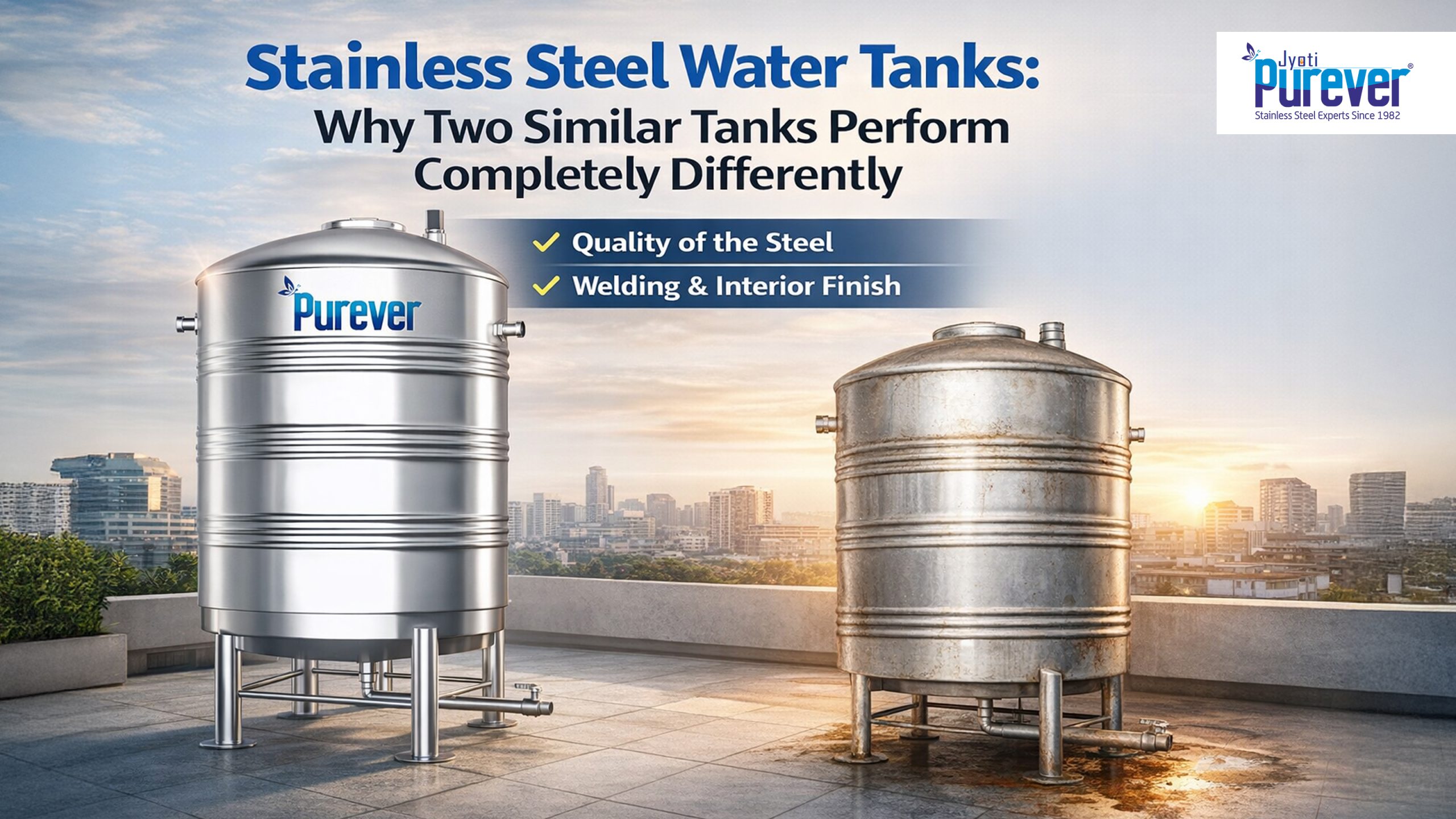
At first glance, most stainless steel water tanks look… identical. Same shine, same shape, same promise. If you’re standing on a terrace choosing between two tanks, it’s honestly hard to tell which one will last longer.
But give it a year or two, and suddenly, they don’t look the same anymore.
One still looks steady, clean, and easy to maintain. The other starts showing small signs, nothing dramatic, just enough to make you uneasy. Slight stains, harder cleaning, maybe a weld line that doesn’t feel as solid as before.
So what actually causes this difference?
It Starts With the Steel (Even If You Can’t See It)
Not all stainless steel behaves the same. The grade, thickness, and treatment of the material make a bigger difference than most buyers realise.
Good-quality stainless steel water tanks use consistent, food-grade steel that doesn’t react with stored water or environmental changes. Lower-quality builds may cut corners – slightly thinner sheets, mixed-grade steel, or inconsistent finishing.
You won’t notice it on day one.
But after repeated heating, cooling, and water cycles, the difference becomes visible.
This is one reason many builders now prefer investing in better-built SS water storage tanks rather than replacing cheaper ones later.
Welding: The Detail That Decides Longevity
If there’s one place where two tanks differ the most, it’s the welds.
Welding is what holds the entire structure together. Poor welds may look acceptable initially but can weaken under pressure or temperature changes. Over time, that’s where leaks or structural fatigue begin.
High-quality stainless steel water tanks use precise welding techniques that keep joints smooth, strong, and sealed. You won’t notice the craftsmanship immediately, but you’ll definitely notice the absence of problems later.
It’s a small detail that quietly decides whether your SS water storage tanks last 5 years or 20.
Interior Finish: Where Hygiene Is Won or Lost
Open a tank and look inside, that’s where the real story is.
Some tanks have rough interiors. Tiny imperfections, uneven polish, or visible weld marks. These surfaces tend to trap residue and encourage algae growth over time.
Better-built stainless steel water tanks have smooth interiors that don’t give dirt a place to settle. Cleaning becomes easier, faster, and less frequent.
This is especially noticeable in Custom ss water tanks, where the design is tailored and the finish is usually handled more carefully.
Design Matters More Than Shape
Two tanks might look the same from outside but behave very differently based on design details.
Where is the outlet placed?
Is there proper slope for drainage?
Are access lids positioned practically?
Standard designs sometimes ignore these things. But Custom ss water tanks are often built around real usage, meaning better drainage, easier cleaning, and smoother water flow.
That’s why many commercial setups move toward SS water storage tanks that are designed specifically for their layout instead of relying on generic models.
The Way a Tank Ages Tells the Truth
The real comparison between two tanks doesn’t happen on installation day. It happens after a few years.
One tank:
Still holds its shape
Remains easy to clean
Doesn’t demand attention
The other:
Needs frequent cleaning
Shows signs of wear
Becomes part of the maintenance checklist
This is where good stainless steel water tanks stand apart. And where Custom ss water tanks often prove their value, because they’re built not just to fit, but to last.
A Concluding Note on Purever
Purever focuses on the details that most people overlook – steel quality, welding precision, and practical design. Their stainless steel water tanks are built to maintain consistency over time, not just look good at installation.
With Custom ss water tanks, Purever also adapts the design to real building needs, ensuring that the tank performs as well as it fits. Their SS water storage tanks are often chosen by those who want fewer surprises years down the line.
So Why Do Two Similar Tanks Behave So Differently?
Because they’re not really the same.
One is built to meet a price.
The other is built to handle time.
And with something as essential as water storage, that difference shows up sooner than most people expect.