
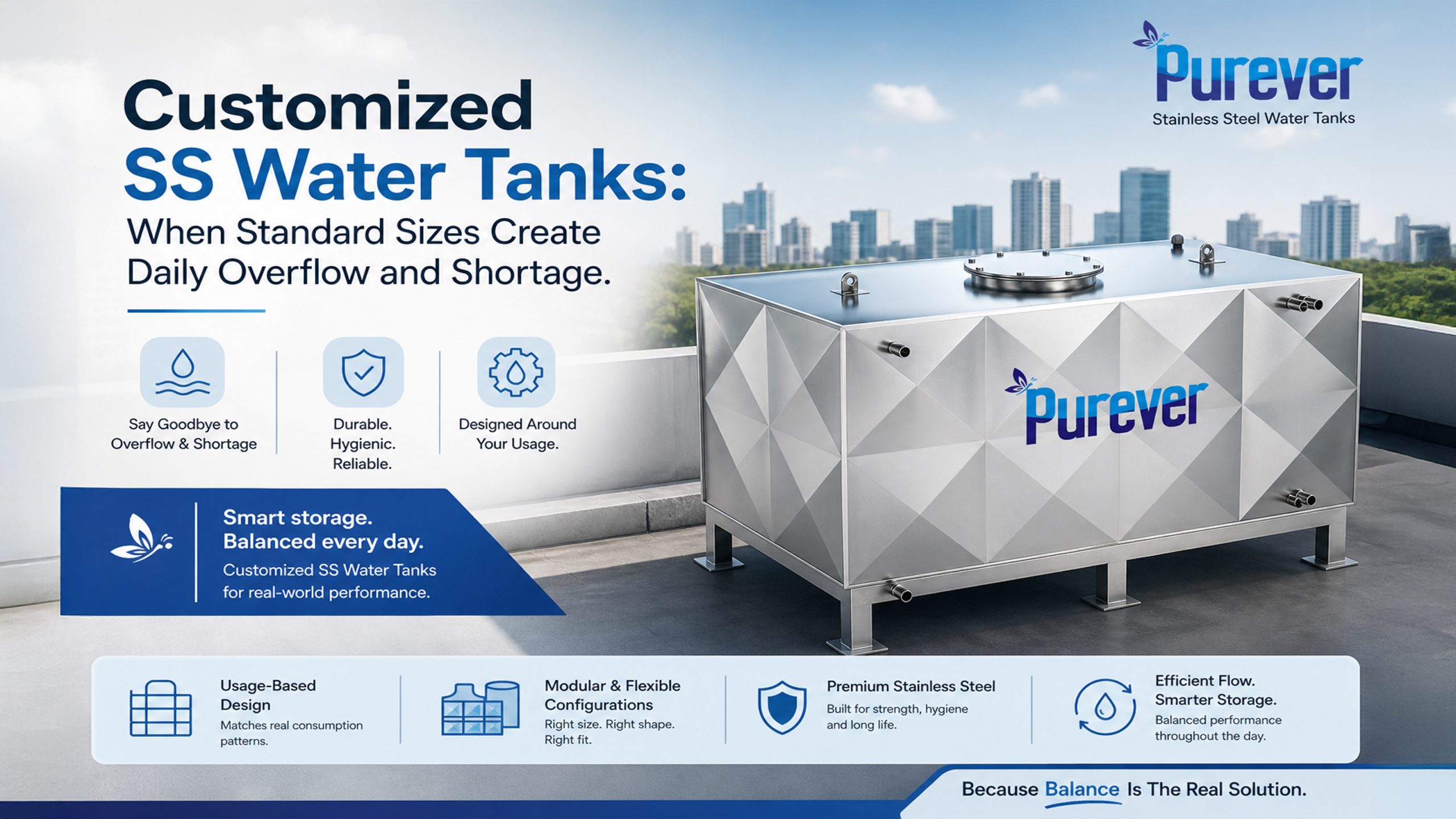
There’s a strange pattern you start noticing in some buildings. The tank overflows in the afternoon, water spilling out as if there’s too much of it. Then, a few hours later, especial Customized SS Water Tanks: When Standard Sizes Create Daily Overflow and Shortagelly during peak usage, someone complains there isn’t enough water.
At first, it feels like two separate issues. But they’re usually connected. And more often than not, the problem isn’t supply, it’s how the tank has been sized and designed.
Why Standard Sizes Don’t Match Real Usage
Most installations rely on fixed-capacity tanks. You pick something that seems close enough to your requirement, install it, and move on.
But real water usage doesn’t behave in averages. It fluctuates. Mornings are heavy, afternoons are lighter, evenings pick up again. Standard SS water storage tanks are not designed around these shifts, they’re designed for steady demand.
That’s where the imbalance begins. When usage drops, the tank fills too quickly and overflows. When demand rises, it empties faster than expected, leading to shortages.
It’s not that the tank is wrong, it’s that it doesn’t match how water is actually used.
Why Bigger Tanks Don’t Solve the Problem
The immediate reaction is often to increase capacity. A larger tank seems like the obvious fix.
But in reality, that just shifts the problem:
Overflow becomes more frequent during low demand
Structural load increases
Refill cycles become less efficient
The issue isn’t just about how much water you store. It’s about how that storage behaves throughout the day.
Designing Storage Around Usage Patterns
This is where Customized ss water tanks change the approach.
Instead of focusing only on total volume, they consider:
How water is consumed across different times of the day
How quickly the tank fills and empties
How distribution happens within the building
A well-designed system might use multiple interconnected Customized ss water tanks or divide storage into sections. This allows better control over flow, reducing both overflow and shortage at the same time.
How Stainless Steel Supports Smarter Design
Material plays an important role in making this possible.
With Stainless steel water tanks, you get the flexibility to design tanks in shapes and configurations that match real constraints. Stainless steel allows precise fabrication, making it easier to create modular or segmented SS water storage tanks that fit both space and usage requirements.
At the same time, these tanks maintain durability and hygiene, ensuring long-term reliability.
What Changes After the Fix
The difference isn’t dramatic, it’s steady.
Overflow reduces because water is no longer being stored inefficiently.
Shortages become less frequent because reserve capacity is better managed.
The system starts feeling balanced instead of unpredictable.
That’s when you realise the issue wasn’t capacity, it was alignment.
Where Purever Fits In
Purever designs Customized ss water tanks with real-world usage in mind. Their approach focuses on how buildings actually consume water, not just how much they need.
By combining durable Stainless steel water tanks with practical system planning, they create SS water storage tanks that reduce inefficiencies and improve daily performance.
The Real Solution Is Balance, Not Size
When overflow and shortage happen together, it’s a clear sign that the system is out of balance.
Fixing it doesn’t mean installing a bigger tank or redoing everything. It means designing storage that matches real usage.
With well-planned Customized ss water tanks, supported by efficient Stainless steel water tanks and thoughtfully structured SS water storage tanks, the system stops swinging between extremes, and starts working the way it should.